
The Infrastructure: Scale, Scope and Cross-Border Complexity
The HY4Link network is designed to connect industrial hydrogen producers and consumers across Belgium, Luxembourg, France and Germany — the so-called Greater Region — through a dedicated pipeline backbone of approximately 230 km. That scale alone places it among the most significant hydrogen transmission projects currently advancing in continental Europe. Unlike carbon dioxide or natural gas, hydrogen presents distinct materials challenges: embrittlement of steel, low volumetric energy density, and tight leak-detection requirements. Managing those risks across four regulatory jurisdictions simultaneously demands not just engineering rigour but a unified, real-time data layer — precisely the domain where pipeline digital twins and AI-assisted monitoring add measurable value.
A digital twin of the HY4Link corridor would allow operators to simulate pressure gradients, model compressor scheduling, detect micro-leaks before they become incidents, and optimise throughput against fluctuating renewable-energy supply. This is the legitimate claim of the syntheticfuels.ai editorial lens: in hydrogen infrastructure, the intelligence layer is not a luxury add-on but a core safety and efficiency requirement.
What HY4Link Means for the Synthetic-Fuels Ecosystem
Hydrogen pipelines of this scale are the connective tissue without which the broader Power-to-Liquid and e-fuels value chain cannot function at commercial volume. E-kerosene, e-methanol and e-ammonia all depend on reliable, cost-competitive hydrogen supply. A 230 km backbone linking electrolyser clusters in Germany — such as the RWE GET H2 Nukleus project in Lingen, which is targeting 300 MW of alkaline electrolysis capacity by 2027 — to industrial offtakers in Belgium, Luxembourg and France would materially reduce the delivered cost of green hydrogen and, by extension, the production cost of every synthetic fuel that depends on it. Without pipeline infrastructure like HY4Link, hydrogen must move by truck or liquefied tanker, adding cost and carbon that erode the green premium synthetic fuels are trying to justify.
It is worth stating the honest counterargument: hydrogen pipelines require high capital expenditure and face permitting timelines that routinely stretch beyond initial projections. The efficiency case for hydrogen-derived e-fuels in road transport remains contested — a battery-electric vehicle converts roughly 70–80% of grid electricity to motion, versus 13–20% for an e-fuel powertrain, a gap that matters enormously for the cost per kilometre. Where HY4Link’s offtake case is strongest is in the sectors batteries genuinely cannot serve: long-haul aviation, deep-sea shipping, high-temperature industrial processes, and the heavy industrial consumers already clustered along the Greater Region’s traditional energy corridors.
Technology and Data: The AI Angle
Pipeline digital twins are already deployed on natural-gas networks in Germany and the Netherlands; adapting them to hydrogen requires recalibrating thermodynamic models for hydrogen’s different compressibility and thermal behaviour. Machine-learning models trained on pressure-sensor arrays can predict demand-supply imbalances hours in advance, allowing compressor stations to pre-position and avoid energy waste. For a 230 km cross-border asset operated under four national regulatory regimes, a unified data platform is also a governance tool: it provides the single source of truth that regulators in Brussels, Luxembourg City, Paris and Berlin can each audit without relying on operator self-reporting alone. That combination of operational optimisation and regulatory transparency is precisely why the .ai dimension of this publication is editorially relevant to infrastructure stories like HY4Link — the intelligence layer and the steel layer are inseparable.
Sources
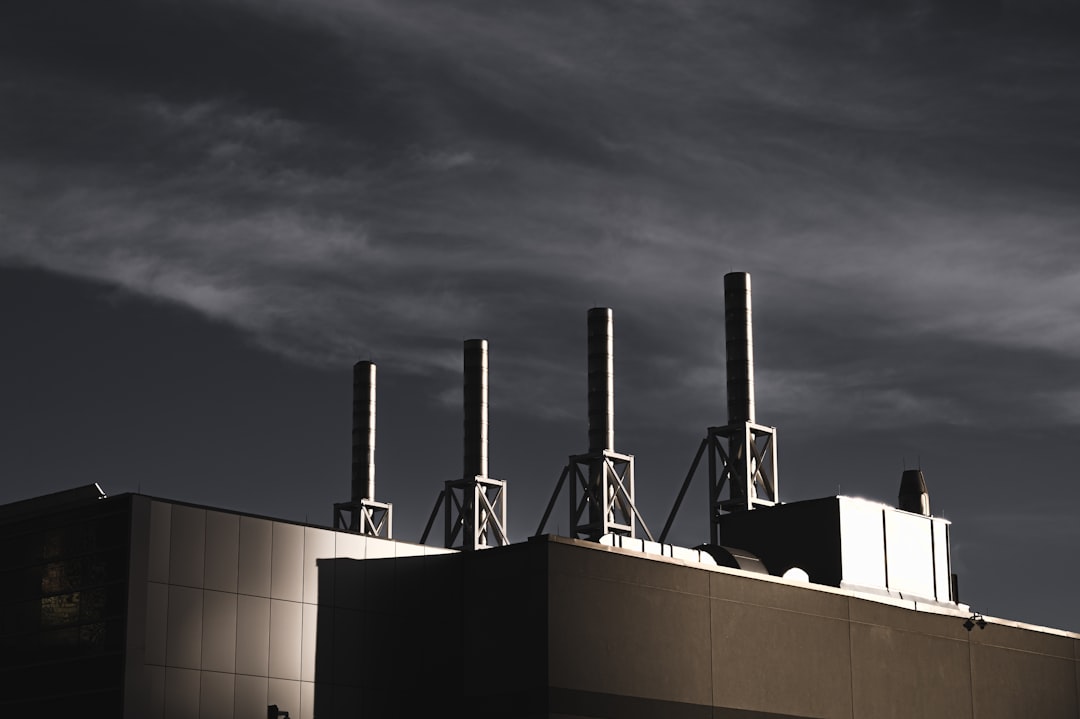
Featured image via Unsplash.










Leave a Reply