
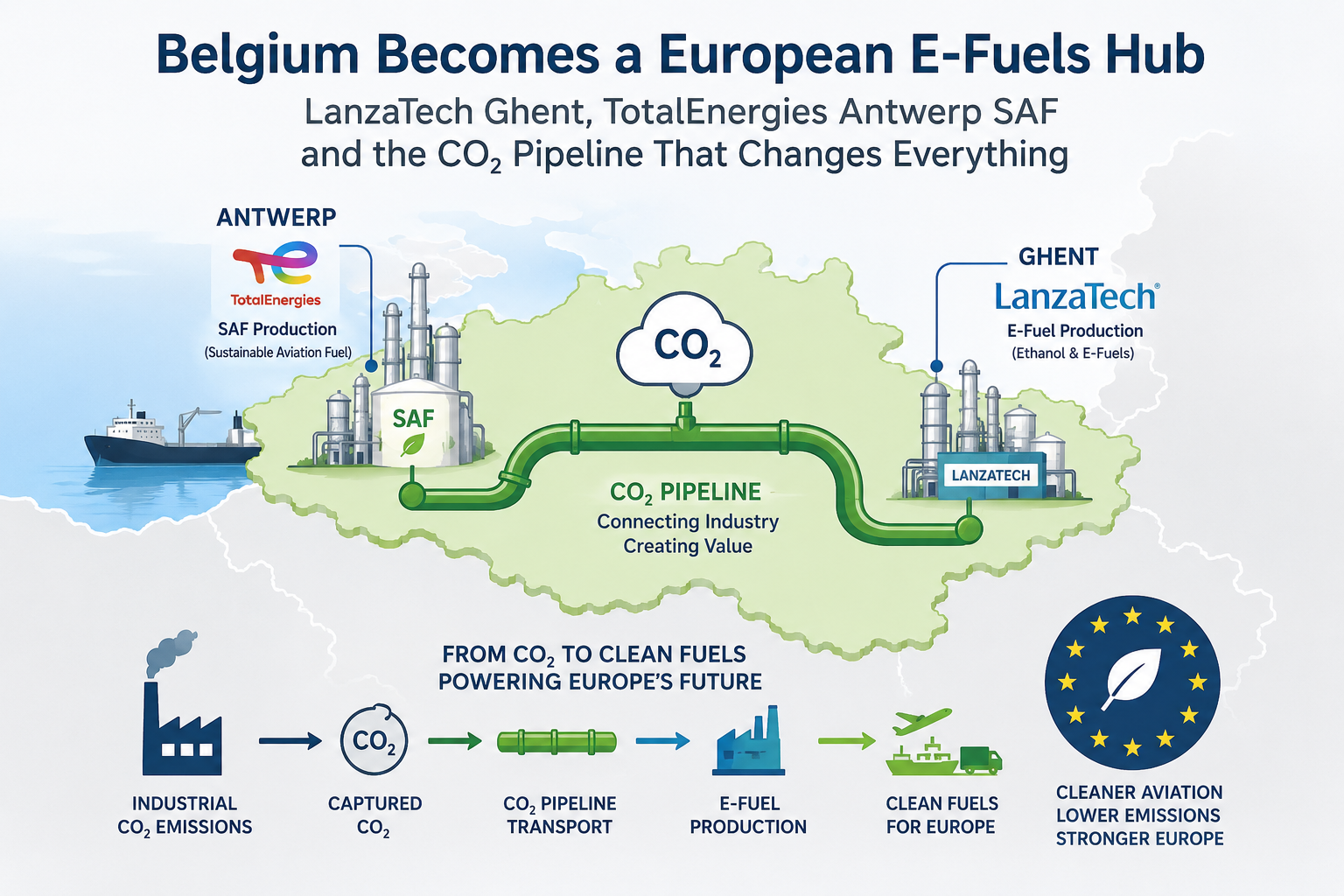

Belgium Becomes a European E-Fuels Hub:
LanzaTech Ghent, TotalEnergies Antwerp SAF
and the CO₂ Pipeline That Changes Everything
🇧🇪 Key Players · May 17, 2026 · syntheticfuels.ai
In the space of three weeks in May 2026, Belgium confirmed its position as a critical node in Europe’s synthetic fuels supply chain. LanzaTech selected Ghent for Europe’s first commercial Alcohol-to-Jet SAF plant (€500M, 79,000 t/yr). TotalEnergies is commissioning 50,000 t/yr SAF at its Antwerp refinery. Fluxys is building a CO₂ backbone pipeline with a local cluster at Antwerp and a connection to Germany by 2030. ENGIE and Infinium are developing the Reuze synthetic fuels project in nearby Dunkirk. And a hydrogen pipeline network is taking shape across the Grand Region connecting Lorraine, Luxembourg, Saarland and Belgium. The pieces of the e-fuels puzzle are falling into place — faster than most observers expected.
Story 1 — LanzaTech Selects Ghent: Europe’s First Commercial ATJ SAF Plant
On May 11, 2026, LanzaTech Global confirmed North Sea Port in Ghent, Belgium as the permanent site for the FLITE project — Europe’s first commercial-scale Alcohol-to-Jet (ATJ) Sustainable Aviation Fuel facility. The €500 million plant, backed by EU Horizon 2020 funding, will use the LanzaJet ATJ process to convert ethanol into SAF and renewable diesel at industrial scale.

Story 2 — TotalEnergies Antwerp: 50,000 Tonnes SAF via Coprocessing
On April 22, 2025, TotalEnergies announced the reconfiguration of its Antwerp refinery to include SAF production via coprocessing — simultaneously processing traditional hydrocarbons and biomass within conventional refining units. The initial project targets 50,000 tonnes per year of SAF, with production planned to commence in 2025. Antwerp joins TotalEnergies’ growing SAF network: Grandpuits (230,000 t/yr from 2026), La Mède (15,000 t/yr), and Normandie (160,000 t/yr) refineries. Source: TotalEnergies official April 22, 2025 — verified.
Story 3 — Fluxys CO₂ Pipeline: The Missing Link for E-Fuels in Belgium
One of the most strategically important infrastructure developments for Belgium’s e-fuels future is the CO₂ backbone pipeline being developed by Fluxys. The Port of Antwerp-Bruges is part of the Antwerp@C consortium, which is building a CO₂ pipeline cluster in Antwerp — with a connection towards Germany by 2030 and a subsea CO₂ highway towards Norway for permanent geological storage.
Story 4 — ENGIE + Infinium “Reuze”: Synthetic Fuels for Aviation and Maritime in Dunkirk
Just across the Belgian border in Dunkirk, ENGIE and Infinium are co-developing the “Reuze” project — a Power-to-Liquid synthetic fuels plant targeting aviation and maritime transport. The project will capture 300,000 tonnes of CO₂ from ArcelorMittal’s steel production facilities, combine it with green hydrogen from a 400 MW electrolyser installed by ENGIE, and produce ultra-low-carbon e-fuels using Infinium’s exclusive PtL technology. Source: ENGIE official — verified.


Leave a Reply