
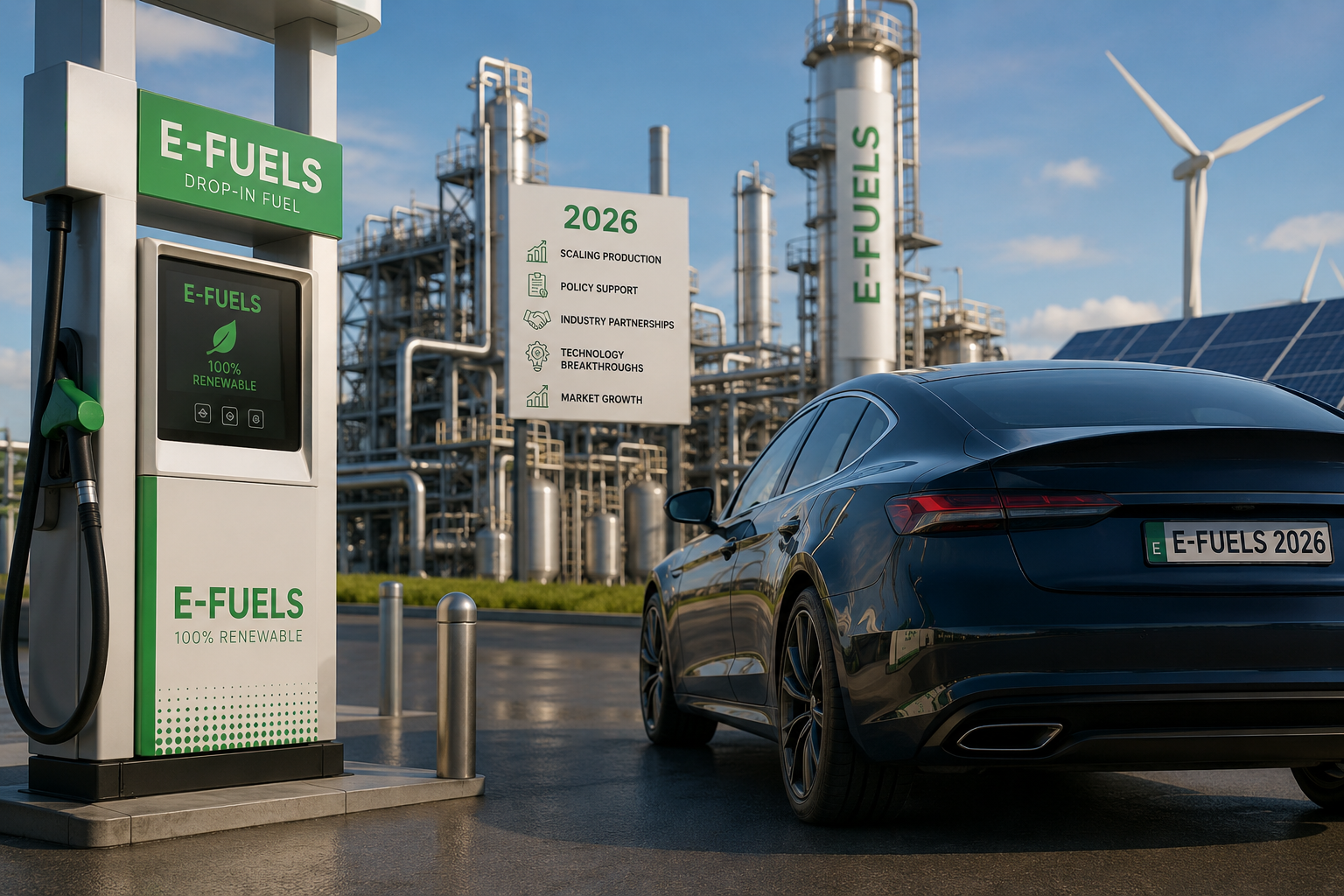
📊 Market News · May 22, 2026 · syntheticfuels.ai

In the space of a few weeks, the synthetic fuels industry has seen a cluster of developments that paint a picture of an industry moving faster than the pessimists predicted — and still slower than the optimists hoped. Here are the five stories that matter most right now.

The Five Developments
Rolls-Royce and easyJet have completed ground testing of a modified Pearl 15 engine running on 100% hydrogen at full takeoff power at NASA’s Stennis Space Center in Mississippi. The engine ran on hydrogen across a simulated full flight cycle — start-up, takeoff, cruise and landing. This is directly relevant to the e-fuels market: every advance in hydrogen propulsion increases the demand signal for green and natural hydrogen, the primary feedstock for Power-to-Liquid e-fuels. Source: easyJet/Rolls-Royce official press release May 2026.
Swiss International Air Lines announced a new partnership with Zurich-based Metafuels aimed at supporting the development and scale-up of synthetic sustainable aviation fuel solutions. Metafuels converts e-methanol — produced from renewable energy, water and CO₂ — into aviation-grade synthetic fuel through its proprietary “aerobrew” process. Lufthansa Group is considering committing to long-term SAF procurement contracts — the type of offtake commitment that PtL project developers need to secure financing. Source: ESG Today / GreenAir News May 14, 2026.
The EU will provide up to €6 per litre for e-fuels and €0.50 per litre for biofuels under its new SAF support scheme. Reuters estimates the financial support could fund the purchase of up to 216 million litres of e-fuels. At current production costs of €8–10/litre for PtL e-SAF, this subsidy effectively bridges the gap with conventional jet fuel, making airline offtake agreements commercially viable for the first time. Source: Reuters / Biofuels International 2026.
While SAF production nearly doubled in 2025, it still accounted for just 0.6% of airlines’ total fuel consumption, against a 2% EU mandate already in force. IATA projects SAF will make up just 0.8% of total jet fuel consumption in 2026. This gap is not a sign of failure — it reflects the capital intensity and lead times of industrial-scale fuel production. But it underscores the urgency of investment decisions that need to be made now for 2030 compliance. Source: IATA SAF Monitor 2026.
Airlines for Europe (A4E) called for the 2030 e-SAF sub-mandate to be postponed, arguing that not enough projects have been approved for investment. EasyJet’s CEO warned: “The reality is, it won’t be there, and you can see it won’t be there.” This tension between regulatory ambition and industrial readiness is the defining story of the e-fuels sector in 2026 — and the EU’s response (the €6/litre subsidy) signals that policymakers are choosing to accelerate rather than retreat. Source: Aviation Week / A4E Brussels Summit March 2026.
Disclaimer: Editorial content — not financial advice. BESS Energie SRL · syntheticfuels.ai · BCE BE 0698.949.732


Leave a Reply